
KARYA



This animation follows the story of a young girl named Rina, who grows up listening to her grandmother's tale about a powerful Sea Queen who protects their island from foreign invaders. Inspired by the legend, Rina sets out on a journey to find the Sea Queen and seek her help in protecting their homeland. Along the way, she meets a young boy who turns out to be the Sea Queen's son. Together, they discover that the Sea Queen has fallen ill and can only be healed with a magical pearl hidden inside a giant seashell. During their adventure, Rina demonstrates her kindness by helping injured marine animals, including a sea turtle covered in barnacles. Her compassion eventually earns her the trust of the sea creatures, who guide her to the magical pearl. With the pearl, they successfully restore the Sea Queen's strength. Recovered, the Sea Queen rises to defend the island against the invading forces. Through fantasy and adventure inspired by maritime folklore, the animation explores themes of environmental conservation, compassion toward marine life, and the importance of protecting one's homeland. It emphasizes how kindness, courage, and a strong connection with nature can become powerful forces in overcoming challenges. The story also highlights the relationship between cultural heritage and the responsibility of preserving both natural and cultural resources.
This animation follows the journey of a young girl who has recently been chosen as a Niskala Maiden, a mythical guardian associated with Indonesian folklore and cultural traditions. Still inexperienced in her new role, she encounters a mysterious giant named Buto Ijo near the coast. However, the encounter takes an unexpected turn when she discovers that Buto Ijo is searching for his daughter, Timun Mas, who happens to be her close friend. As supernatural creatures emerge and threaten them, the two Niskala Maidens join forces with Buto Ijo to fight against the mysterious beings. After successfully defeating their enemies, Buto Ijo returns to Java, while the young Niskala Maiden remains in Bali to continue her journey and receive guidance from her more experienced friend. Through fantasy, adventure, and elements of Indonesian folklore, the animation introduces audiences to the richness of local mythology and cultural heritage. It highlights the importance of friendship, courage, and cooperation while portraying the passing of cultural knowledge between generations. The story also encourages younger audiences to explore and appreciate Indonesia's diverse folklore as part of its cultural identity.

This animation tells the story of a kind-hearted monk who has a son struggling with gambling habits. Out of compassion for his son, the monk approaches Naga Basuki, a mythical serpent, to ask for gold. Naga Basuki generously grants his request, hoping to help the family. However, the son continues to gamble and wastes the gold without learning from his mistakes. Upon discovering the source of the gold, the son approaches Naga Basuki directly and asks for more. Although Naga Basuki initially grants his request out of kindness, the son's greed eventually leads him to cut off the serpent's golden tail in an attempt to obtain even more wealth. Enraged by this betrayal, Naga Basuki punishes the son, turning him into ashes. Through mythology and moral storytelling, the animation explores the destructive nature of greed, gambling, and the inability to appreciate what one already has. It also highlights the importance of responsibility, self-control, and understanding the consequences of one's actions. The story reminds viewers that kindness should not be exploited and that the pursuit of wealth without moral boundaries can lead to devastating consequences.

This animation tells the story of Kalyana Purwa, a mythical creature who serves as the guardian of a forest and its wildlife. Known for its ability to grow into a giant when its territory is threatened, Kalyana Purwa has long been a childhood friend of a young boy who is now a junior high school student. The story unfolds when a group of students visits the mountain where Kalyana Purwa is believed to reside. While one of them dismisses the local legend and recklessly disturbs the forest animals, his actions awaken the forest guardian's anger. As Kalyana Purwa transforms into a giant and confronts the students, an old friendship is rekindled through a familiar necklace given to the boy during their childhood. Recognizing his old friend, Kalyana Purwa chooses to release them rather than continue its retaliation. Through folklore and fantasy, the animation highlights the importance of environmental awareness, wildlife protection, and the consequences of human interference with nature. Kalyana Purwa symbolizes the need to respect the environment, while the childhood friendship represents the emotional connection between humans and the natural world. The story encourages younger generations to take responsibility for preserving forests and biodiversity for the future.

This animation tells the story of a farmer who struggles with the demanding tasks of maintaining his farm. Hoping to make his work easier, he purchases an AI-powered machine advertised as an advanced farming assistant. The machine initially helps him with various agricultural activities, such as watering crops and applying fertilizer. However, the farmer gradually becomes dissatisfied after comparing his farm with a neighboring one, which appears more successful and uses more advanced technology. Driven by envy and the desire to achieve better results, he continuously pushes the AI machine to perform beyond its limits. Eventually, the machine malfunctions and explodes. Through humor and a futuristic approach, the animation highlights the potential consequences of excessive dependence on technology, unrealistic expectations, and unhealthy comparisons. It reminds viewers that technological advancements should be used wisely and that progress should not come at the expense of balance and responsibility.

This animation follows the story of a young child growing up in a broken home, who eventually leaves home and encounters a supernatural figure known as "Kuntilanak". The child is taken to another world, where the figure takes on a motherly role, providing food, comfort, and affection through simple acts such as reading bedtime stories. In this fantasy world, the child experiences the warmth and attention that seem to be missing from their everyday life. Meanwhile, the child's biological parents search desperately for their missing child and seek help from a spiritual practitioner. As the supernatural world eventually collapses, the child returns to their parents, ending the story with an emotional reunion. Through its blend of horror, fantasy, and family drama, the animation explores a child's longing for affection, emotional security, and parental attention. The contrast between the supernatural figure's nurturing behavior and the child's real family situation raises questions about what truly makes someone a parental figure: biological bonds or the love and care they provide.
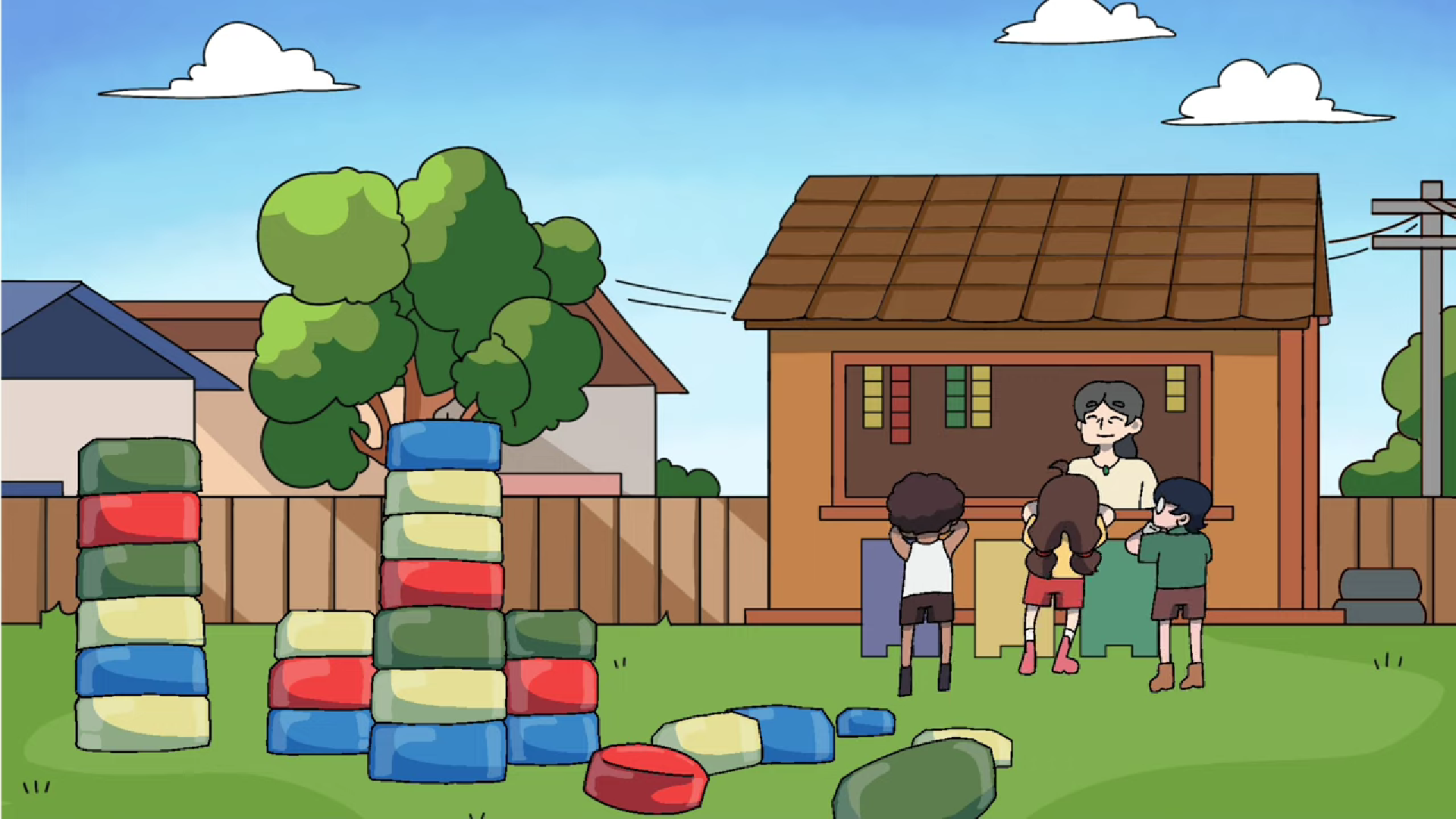
This animation tells the story of three children who grow up sharing moments together at a local *warteg*, a humble food stall that becomes their favorite gathering place. As time passes, they grow older, but the warteg remains a meaningful part of their lives, symbolizing friendship, togetherness, and shared memories. Through their journey from childhood to adulthood, the animation highlights how small moments of connection can build lasting relationships and a stronger community. Inspired by the vision of **Golden Indonesia 2045**, the story conveys the idea that Indonesia's future is not built by individuals alone, but through unity, collaboration, and togetherness across generations. Ultimately, the warteg represents more than just a place to eat; it is a symbol of how Indonesia grows through the bonds and shared experiences of its people.

Mari, an artist with a deep desire to create art in an environment where people believe that, in today’s world, there is no need to spend time and effort drawing anymore. "AI can produce visually impressive results more easily than uncertain, handmade work". Leads Mari questioning in her head, “What if I want to create my own work, and not my work created by someone else”
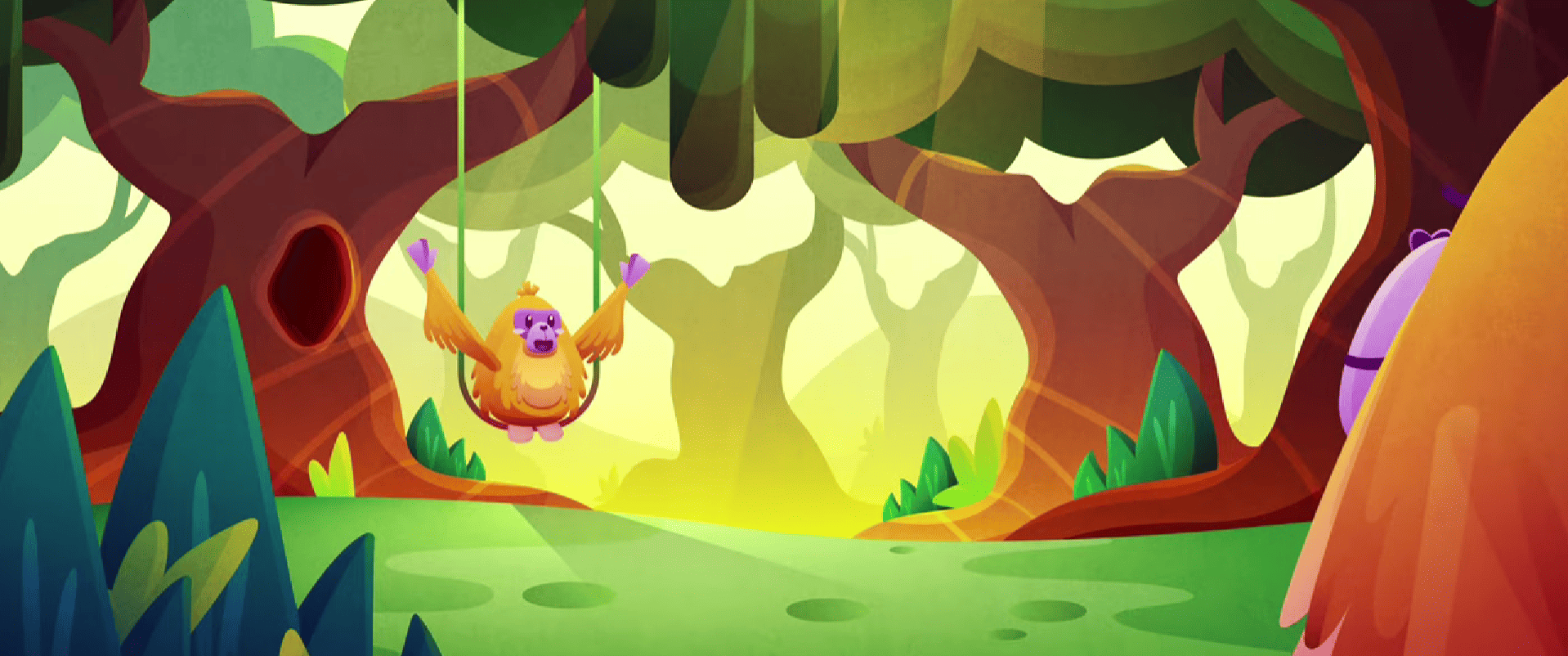
In the music video "Pelindungmu," I want to tell the story of an orangutan mother’s love for her child. When the KARHUTLA fires devour Kalimantan’s forest, the mother arrives too late and her child cannot be saved. The video opens in a warm, peaceful forest, then the flames slowly creep in, reminding us that behind the headlines of forest fires lies real loss for animals who have no voice.
